Introduction — Why Most Buyers Don’t Understand the True Cost of EN590
When buyers receive a price like:
EN590 Rotterdam FOB: Platts + X
EN590 CIF: Platts + Y
EN590 TTT: Z USD/MT
…they usually think the number is:
The refinery price
The “all-inclusive” cost
The final amount owed
Or the seller’s profit margin
But this is false.
Behind every EN590 price, there are 12 hidden cost layers that determine the real value of the deal:
Freight (charter)
Bunker fuel
Terminal storage
Tank rental
Injection cost
Inspection (SGS / Saybolt)
Demurrage
Port charges
Documentation
Loss factor
Insurance
Operational risks
Buyers who don’t understand these costs:
❌ Misjudge real market pricing
❌ Fall for fake discounted offers
❌ Fail to understand refinery premiums
❌ Enter deals they cannot actually finance
❌ Reject legitimate SCOs because they “seem expensive”
❌ Become victims of fraud
This guide gives you the institutional, refinery-level breakdown of what EN590 actually costs in a real-world transaction.
SECTION 1 — The Components of Real EN590 Pricing (Macro + Industry Context)

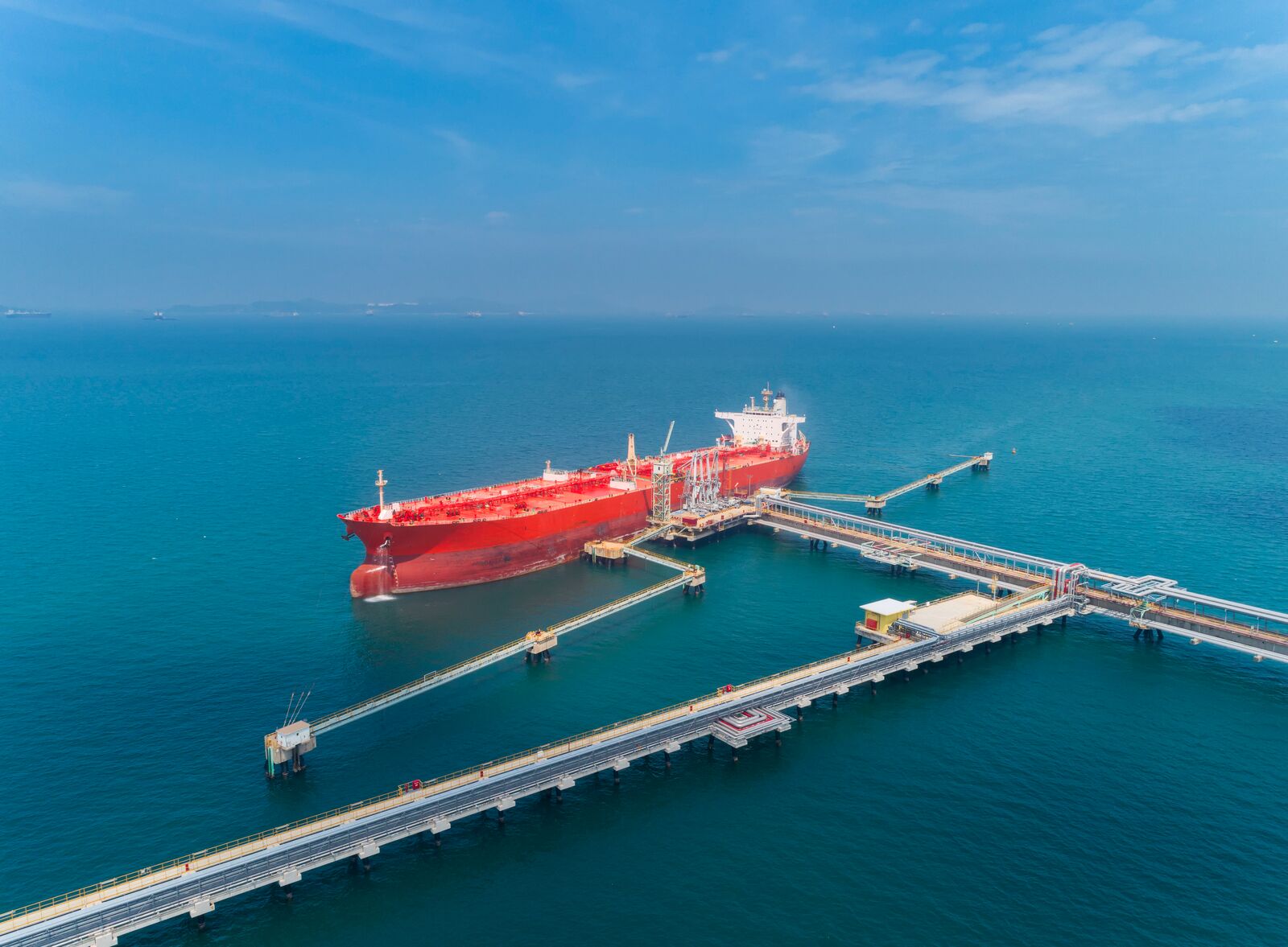

1.1 EN590 Pricing Is Built on Layers, Not a Single Number
Every EN590 cargo (10 ppm ULSD) is influenced by:
Platts (or Argus) benchmark
Refinery premium
Logistics cost
Risk premium
Losses (evaporation, density variance)
Operational fees
Example:
EN590 FOB Rotterdam = Platts ULSD + refinery premium + terminal fees + risk allocation.
1.2 The Biggest Misconception: “Refineries Sell Cheap”
Refineries never sell at discounts.
Their price includes:
Crude cost
Refining cost
Catalysts & additives
Desulfurization cost
Operating cost
Maintenance
Storage
Distribution
Risk premium
Profit
If a seller is offering:
❌ “Platts – X”
❌ “Huge discount below market”
❌ “Refinery direct under market value”
…it is not real.
1.3 Why Every Port Has a Different Premium (Rotterdam vs Fujairah vs Jurong)
Premiums depend on:
Local supply/demand
Storage availability
Tank farm congestion
Bunker prices
Port taxes
Distance to refining centers
Shipping lanes
Weather disruptions
Geopolitical risk
This is why:
Rotterdam = higher terminal fees but low-risk
Fujairah = cheaper storage but higher freight risk
Jurong (Singapore) = premium on price but fastest logistics
SECTION 2 — Full Cost Breakdown of EN590 (A–Z)
Below is the real institutional breakdown.
2.1 Freight (Vessel Charter Cost)
Aframax (80,000–120,000 MT)
Average: $1.4M – $2.2M
Influenced by weather, piracy zones, seasonality
MR Tanker (30,000–45,000 MT)
Average: $750k – $1.1M
Factors impacting freight price:
WS (Worldscale) index
Bunker fuel price
Canal fees (Suez)
Port conditions
War Risk premiums (Red Sea, Baltic, Gulf)
Freight alone can add $12–$45 per MT.
2.2 Tank Storage (Tank Farm Fees)
Typical rates:
Rotterdam: $3.50 – $7.00 per MT per week
Fujairah: $2.00 – $6.00 per MT
Jurong: $4.00 – $8.00 per MT
Fees depend on:
Tank availability
Port congestion
Product class
Minimum rental durations (often 30–60 days)
2.3 Tank Rental / Reservation Fee
Before the buyer injects, tank farms charge:
Tank reservation fee
Line cleaning fee
Pre-injection inspection fee
Average: $15,000 – $60,000 per tank cycle.
2.4 Q&Q Inspection (SGS, Saybolt, Intertek)
Sampling + testing + certificates:
DIP test: $2,000 – $5,000
Full Q&Q: $3,500 – $7,500
Multi-tank Q&Q: $8,000 – $12,000
If aviation fuel (Jet A1):
Metals & Freeze Point tests: +$1,500 – $3,500
2.5 Injection Cost (Pump-Over / TTT / TTV)
Tank-to-tank or tank-to-vessel:
Pipeline alignment: $5,000 – $20,000
Pump usage: $0.30 – $1.50 per MT
Terminal operator fees: $8,000 – $25,000
Injection is one of the most misunderstood costs.
2.6 Port Charges (Port Dues)
Mandatory by all ports:
Berthing
Pilotage
Tugboats
Security
Environmental tax
A real vessel call costs: $30,000 – $75,000.
2.7 Bunker Fuel (Fuel for Vessel Engines)
Large tankers consume 50–80 tons of fuel per day.
Cost impact: $8 – $20 per MT.
2.8 Demurrage (Delays)
If the buyer/seller is late:
Vessel waiting = $18,000 – $35,000 per day
Can increase CIF cost drastically
Most retail buyers are unaware demurrage destroys deals.
2.9 Insurance
Covers:
Cargo loss
War risk
Piracy
Weather
Terminal accidents
Cost: $0.70 – $2.20 per MT.
2.10 Documentation Fees
Terminals charge for:
Out-turn report
Ullage report
B/L
Manifests
Surveyor reports
Average: $2,000 – $8,000.
2.11 Handling & Additives
For winter-grade diesel:
CFPP adjustment
Cold additives
Anti-gel additives
Cost: $2 – $6 per MT.
2.12 Loss Factor (Evaporation & Shrinkage)
Every petroleum product has losses:
Evaporation
Shrinkage due to temperature
Meter variance
Transfer loss
Adherence to pipeline
Water extraction
Typical EN590 loss factor:
0.20% – 0.65% per transfer.
A 50,000 MT load can lose 100–300 MT simply due to physics.
SECTION 3 — NNRV Professional Analysis: What Most Buyers Don’t Know
3.1 A Price Below Market Is Not Competitive — It Is Fake
If a seller offers:
“EN590 at massive discount”
“Refinery direct very cheap”
“Below Platts – X%”
…it is always fake.
A refinery cannot sell below:
Crude cost
Refining margin
Operational cost
Storage
Logistics
Risk premium
It is economically impossible.
3.2 Real EN590 Prices Have Extremely Tight Margins
Professional traders make:
$3 – $12 per MT per cycle
Sometimes less
If a broker claims they earn:
❌ $30/MT
❌ $50/MT
❌ $100/MT
…it is fraud.
3.3 Loss Factor Is One of the Biggest Hidden Costs
Retail buyers never account for:
Temperature
Density correction
Shrinkage
Ullage discrepancies
Professional buyers always include:
CTL (Correction to Liquid Volume)
CPL (Correction for Pressure)
API Gravity calculations
3.4 CIF Includes Massive Risk Premiums
The seller covers:
Freight
Insurance
Port charges
Vessel risk
Delivery guarantee
This makes CIF more expensive than FOB/TTT.
Retail buyers don’t understand why—NNRV explains it in every SPA.
SECTION 4 — Step-by-Step Breakdown of Real EN590 Costing (Practical Example)
Scenario: 50,000 MT EN590 TTT Rotterdam
| Cost Component | Estimated Cost | Cost per MT |
|---|---|---|
| Tank Storage (2 weeks) | $350,000 | $7.00 |
| Q&Q (Full) | $7,500 | $0.15 |
| Injection | $40,000 | $0.80 |
| Port Fees | $55,000 | $1.10 |
| Loss Factor (0.4%) | 200 MT loss | ~$10,000 equivalent |
| Documentation | $5,000 | $0.10 |
| Total Logistics Cost | ~$467,500 | ~$9.35 per MT |
Conclusion:
Any seller offering “cheap EN590” cannot cover this base cost.
SECTION 5 — Buyer & Seller Questions (20 Institutional Answers)
10 Buyer Questions
Why do EN590 prices vary so much by port?
What is included in FOB pricing?
What is included in CIF pricing?
Who pays for Q&Q?
Why is injection so expensive?
Why do terminals charge so many fees?
What is the loss factor and why must I accept it?
Why can’t I calculate price only from Platts?
Why is “Platts – Discount” impossible?
How does NNRV validate real pricing?
10 Seller Questions
How do I justify my premium to the buyer?
What documentation proves real costing?
How do I avoid buyers thinking my price is “too high”?
What is the correct way to present costs?
When should I include storage fees?
How do I prevent buyers from sabotaging the chain?
What is normal commission per MT?
Why does buyer misunderstanding kill deals?
Should I show breakdowns to buyers?
Can NNRV structure pricing for me?
SECTION 6 — Why This Cost Structure Is Globally Recognized
Refineries, terminals, and traders follow:
Platts / Argus benchmarks
ASTM & EN product standards
ICC Incoterms 2020
ISO/IEC 17025 (lab testing)
ISPS Port Security
IMO bunkering rules
Basel III trade compliance
Every EN590 cargo anywhere in the world respects this structure.
SECTION 7 — Professional CTA
📌 Need Help Understanding Real EN590 Pricing?
NNRV Trade Partners provides:
Professional cost modeling
Real logistics breakdown
Verified terminal & refinery pricing
SPA structuring
Risk & loss factor assessment
Full buyer & seller advisory
📩 info@nnrvtradepartners.com
🌐 www.nnrvtradepartners.com
Get a true price, not a story.
Mini FAQ (5 Key Questions)
Is EN590 ever discounted?
No — only fake sellers discount below real market value.Who pays for Q&Q?
Traditionally buyer during DIP; seller for pre-export testing.Why is injection expensive?
Terminal operators, pipeline alignment, pump usage, inspection.Is loss factor negotiable?
No — it is physics.Can NNRV authenticate any SCO or pricing?
Yes — we perform institutional verification.
Why Choose NNRV Trade Partners?
Full cost transparency
Institutional-grade logistics understanding
SGS & Q&Q compliance mastery
Anti-fraud intelligence
Real refinery & terminal relationships
Global buyer & seller protection

About the Author
With extensive experience in international finance, the author structures high-level funding
solutions for governments, private corporations, public–private partnerships (PPP),
and large-scale development projects across energy, infrastructure, real estate,
education, healthcare, agriculture, and humanitarian sectors.
Operating through a global network of top-tier banks, institutional partners,
private capital groups, and regulated financial platforms, the author manages
confidential and compliant strategies involving SBLC, BG, MTN, DLC,
trade finance, structured finance, and monetization frameworks.
All processes follow strict AML/KYC, due diligence, and international regulatory
standards.
The author’s mission is to simplify access to world-class financial knowledge and
bring clarity to complex funding mechanisms, empowering governments, communities,
and project owners to realize transformative initiatives that enhance education,
healthcare, housing, clean energy, and economic development in emerging regions.
Professional Engagement & Confidentiality
All interactions are confidential, conducted with integrity, and aligned with
international compliance protocols.
No public fundraising, investments, or financial solicitations are offered.
Each project is treated with discretion, professionalism, and strategic precision.
Important Legal Disclaimer
This content is strictly educational and informational.
It does not constitute financial advice, investment solicitation, securities
promotion, or an offer to participate in any financial product, instrument, or program.
Any mention of SBLC, BG, MTN, PPP, monetization, structured finance, or trade finance
is purely illustrative and intended to promote understanding of global financing
mechanisms.
All real transactions require independent legal, tax, and regulatory assessments
by qualified professionals.
The objective of these publications is to contribute to global development by
promoting transparency, education, access to funding knowledge, and sustainable
solutions for social welfare, healthcare, housing, and humanitarian progress.
Contact
For confidential professional inquiries:
Email: info@nnrvtradepartners.com

I think that everything posted made a ton of sense.
However, think about this, suppose you added a little
content? I am not saying your information is not good, but what if you added a post title to maybe get people’s attention? I
mean The Real Cost Breakdown of EN590 | Freight, Storage, Inspection, Injection & Loss Factor
Explained (2025 Institutional Guide) – NNRV TRADE is kinda plain. You should peek
at Yahoo’s home page and see how they create article
headlines to get people to click. You might try adding a
video or a related picture or two to grab readers excited about everything’ve got to say.
Just my opinion, it would bring your website a little livelier.