Introduction — Why Quality Validation Determines Whether a Deal Succeeds or Fails
Every genuine petroleum transaction—EN590, Jet A1, D6, LPG, Crude—depends on three decisive documents:
Injection Report
Q&Q Report (Quantity & Quality / SGS)
Density Verification
These documents determine:
Whether the product is real
Whether the product meets contractual specifications
Whether the buyer receives what was promised
Whether the seller can legally invoice
Whether banks release MT103 / LC payment
Whether title can transfer
Whether a vessel can load or a tank can receive
Despite their importance, 90% of traders and mandates cannot explain the difference between Q&Q, Injection Report, and Density, which leads to:
❌ Wrong assumptions
❌ Fraud exposure
❌ Misinterpretation of POP
❌ Deal delays
❌ Disputes after SGS
❌ Rejection at terminal level
This guide explains in institutional, technical detail how petroleum quality is validated inside tank farms and refineries.
SECTION 1 — The Real Purpose of Each Document

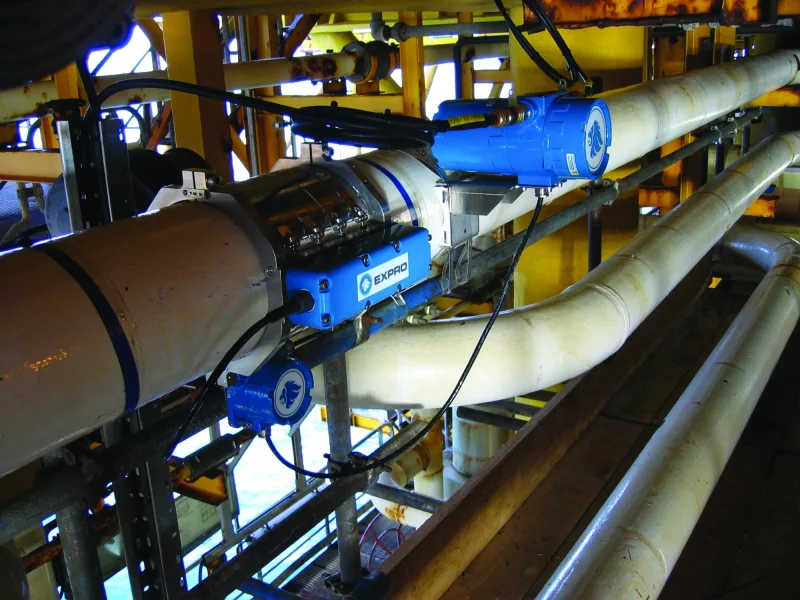


1.1 Injection Report — Proof of Physical Movement
The Injection Report is generated by the tank farm or pipeline operator during:
TTT transfer (Tank-to-Tank)
TVD / TTV (Tank-to-Vessel or Vessel-to-Tank)
Pipeline injection
Loading or discharge operations
The Injection Report records:
Start/stop times
Source tank → destination tank
Flow rate (m³/h)
Pump performance
Total volume moved
Pressure & temperature logs
Pipeline configuration
Loss/gain analysis
Injection reports prove that the product has physically moved and allow buyers to verify that:
Correct tank was used
Correct quantity was transferred
No manipulation or substitution occurred
It is not a quality document—it is an operational one.
1.2 Q&Q (Quantity & Quality) — The Legal Basis for Payment and Title Transfer
Q&Q is the independent inspection report carried out by:
SGS
Saybolt
Intertek
Bureau Veritas
This report includes:
Quantity Section (“Q”)
Ullage/innage measurements
Temperature
Observed volume
Density (observed & @ 15°C)
Correction factors (CTL/CPL)
Net Standard Volume (NSV)
Metering skid results
Loss/gain reconciliation
Quality Section (“Q”)
For EN590:
Density @ 15°C
Sulfur
Flash point
CFPP (Cold Filter Plugging Point)
Water & sediment
Viscosity
Appearance
Aromatics
Cetane index
For Jet A1:
Freeze point
Flash point
Aromatics
Conductivity
Water contamination
Metals (Na, K, Ca, Fe)
Q&Q is the most important document in the transaction because:
✔ It determines conformity
✔ It determines title transfer
✔ It determines invoice quantity
✔ It determines payment release
✔ It is attached to the Commercial Invoice
This is the document that truly decides:
“Do we proceed or reject this cargo?”
1.3 Density — The First Parameter Buyers Check, the First Parameter Scammers Fake
Density determines:
The grade
The refinery origin
The distillation profile
The value of the product
Whether the cargo matches EN590 or Jet A1 spec
A professional trader always checks:
Density @ Observed Temperature
Density @ 15°C (reference standard)
Temperature at the time of sampling
Consistency with the refinery batch
Consistency with previous SGS results
Density mismatches are the #1 indicator of:
Blending
Contamination
Fake SGS
Wrong product
Temperature manipulation
Water presence
Serious transactions begin by verifying density—
long before POP is even considered valid.
SECTION 2 — How Quality Is Validated Step-by-Step in Terminals & Refineries
Below is the real industrial sequence, not the Telegram/myth version.
2.1 Step 1 — DTA (Dip Test Authorization)
Buyer receives authorization for Q&Q inspector (SGS) to enter tank.
2.2 Step 2 — DIP Test (Initial Tank Gauging)
Inspector measures:
Tank level
Temperature
Density
Ullage/innage
Water bottoms
This creates the opening quantity.
2.3 Step 3 — Q&Q Sampling and Laboratory Testing
Samples taken:
Top
Middle
Bottom
Composite
Sent to SGS lab for:
Density
Sulfur
Flash point
CFPP
Aromatics
Metals
Freeze point
Viscosity
This produces the quality section.
2.4 Step 4 — Injection / Pump-Over (TTT, TTV, etc.)
During transfer:
Meters record flow
Temperature/pressure monitored
Pipelines aligned
Loss/gain analyzed
The Injection Report is created here.
2.5 Step 5 — Closing Gauges + Final Q&Q
After transfer:
Closing quantity established
Metering skid data reconciled
Final Q&Q confirms quality remained within spec
Loss/gain officially recorded
2.6 Step 6 — Terminal Issues Out-Turn & Injection Reports
Documents delivered:
Injection Report
Out-turn Quantity Report
Final Q&Q Certificate
Tank Stock Statement
Operational Logs
These form the POP proof bundle.
2.7 Step 7 — Title Transfer + Invoice + MT103 Release
If Q&Q is acceptable:
Seller issues Commercial Invoice
Buyer pays MT103
Title passes
Product becomes buyer’s property
If Q&Q fails:
Contractual penalties apply
Buyer may reject
Seller must remedy (if allowed by SPA)
SECTION 3 — NNRV Expert Analysis: How to Detect Fake Reports Instantly
Professional traders check for:
3.1 Density vs Temperature Consistency
If density is correct but temperature is unrealistic → fake.
3.2 Injection Report Without Terminal Stamp
No stamp = fraud.
3.3 Q&Q Without Serial Number
SGS always includes traceable certificate numbers.
3.4 Wrong Tank Number or Terminal Name
Terminal can confirm instantly.
3.5 Perfect “round” values
Real SGS always has decimal variations.
3.6 No reconciliation between DIP and closing gauges
Mismatch = fabricated documents.
SECTION 4 — Step-by-Step: How a Professional Reads These Documents (10-Min Checklist)
1. Verify terminal name, tank number, date
Should match TSA & DTA.
2. Check density @ 15°C first
Most fraud happens here.
3. Compare observed vs corrected density
Large gap = manipulation.
4. Confirm sulfur content
Critical for EN590 / Jet A1 acceptance.
5. Check temperature during sampling
Impacts density & volume.
6. Analyze Injection Report times & flow
Must be realistic.
7. Confirm metered vs gauged quantity
Loss/gain must be small.
8. Inspect water & sediment values
Indicates contamination.
9. Check for inspector signature + seal
Mandatory.
10. Compare values with contract annex
Zero deviations allowed unless SPA tolerances permit.
SECTION 5 — 20 Buyer & Seller Questions (With Clear Institutional Answers)
10 Buyer Questions
Does Q&Q guarantee product quality?
Is Injection Report part of POP?
Does density prove refinery origin?
Are digital SGS copies valid?
Can Q&Q be faked?
Does the buyer receive Injection Report?
Who pays SGS fees?
Can I reject product after Q&Q?
What if density is slightly off?
Can NNRV validate Q&Q authenticity?
10 Seller Questions
When should I release Q&Q?
Should I provide Injection Report before payment?
How do I deal with off-spec tests?
Who controls the sampling point?
Can I give partial test results?
What if buyer disputes density?
Can Injection Report be edited? (No)
Does terminal verify each step?
How to avoid fraud accusations?
Can NNRV coordinate SGS and injection operations?
SECTION 6 — Why This Verification System Is Globally Standard
These documents follow:
ASTM International standards
EN standards for EN590 (EN 590:2024)
DEF STAN 91-091 for Jet A1
ISO/IEC 17025 for laboratory accreditation
ICC Incoterms 2020
Basel III trade documentation rules
FATF AML requirements
ISPS Port Security
Accepted by:
Refineries
Tank farms
Banks
Traders
Governments
Port authorities
Marine surveyors
SECTION 7 — Professional CTA
📌 Need Injection Report, Q&Q, and Density Verification Before You Commit?
NNRV Trade Partners provides:
Full SGS and Q&Q authentication
Injection Report verification
Tank farm validation
Terminal reconciliation
POP review
Anti-fraud document analysis
Buyer & seller protection for EN590, Jet A1, D6 and Crude
📩 info@nnrvtradepartners.com
🌐 www.nnrvtradepartners.com**
We ensure your transaction is real, compliant, and protected.
Mini FAQ (5 Expert-Level Questions)
Does Q&Q equal POP?
No—POP includes Q&Q but also operational and legal documents.Is Injection Report mandatory for TTT?
Yes—terminal must record all pump-over details.Can density reveal stolen or recycled product?
Yes—density fingerprint shows inconsistencies.Can Q&Q be used for LC negotiation?
Yes—banks accept it for payment triggers.Does NNRV provide full verification?
Yes—end-to-end.
Why Choose NNRV Trade Partners?
Institutional petroleum expertise
Refined product specialization (EN590, Jet A1)
SGS, Q&Q and POP authentication specialists
Terminal-driven technical knowledge
Fraud-prevention methodology
Global buyer & seller protection