Introduction — Why Your Choice of Port Determines Whether Your EN590 TTT Deal Succeeds or Fails
Choosing the correct port for a TTT (Tank-to-Tank Transfer) transaction is one of the most underestimated but critical decisions in the EN590 supply chain.
Most buyers think the port is “just a location.”
In reality, it determines:
Transaction risk
Speed of POP and DTA
Tank availability
Storage cost
Premium or discount
Refinery compliance acceptance
SGS/DIP test scheduling
Overall success or failure of the deal
In 2025, the three dominant hubs for EN590 TTT remain:
Rotterdam (Netherlands) – Europe’s compliance capital
Fujairah (UAE) – Middle East strategic storage hub
Jurong (Singapore) – Asia-Pacific’s refined product gateway
This article explains which port is best, depending on your trade profile, risk tolerance, logistics, capital structure, and end-market destination.
SECTION 1 — Context: How Ports Influence the Global EN590 Market
1.1 Ports Are Not Equal in Compliance, Cost, or Capacity
Real TTT transactions depend heavily on:
Tank farm quality
Terminal operator compliance
ISPS security policies
SGS availability
Pipeline connection to refineries
Storage throughput rating
Pumping/injection capacity
Regional demand and freight routes
A strong port = predictable procedures.
A weak port = delays, fraud exposure, high operational cost.
1.2 Why These 3 Ports Dominate EN590 TTT in 2025
Rotterdam
Direct pipeline connection to major European refiners
Strongest anti-fraud framework
High transparency
Large tank farm network (Vopak, Oiltanking, VTTI)
Fast SGS availability
Fujairah
Gateway between Middle East refineries and Asia
Lower storage cost
Strong tank farm presence
Strategic for marine fuel and diesel
Jurong (Singapore)
Asia’s #1 refined product hub
Efficient regulatory control
Strategic for Asian importers
High tank density and excellent logistics
Each port offers clear advantages depending on the buyer’s strategy.
SECTION 2 — A–Z Breakdown: Rotterdam vs Fujairah vs Jurong (Technical Comparison)
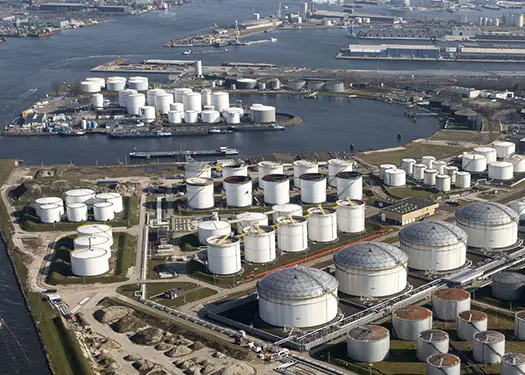

Below is the 2025 professional comparison.
2.1 Compliance & Risk Management
| Criteria | Rotterdam | Fujairah | Jurong |
|---|---|---|---|
| Compliance Level | ★★★★★ | ★★★★ | ★★★★★ |
| Fraud Exposure | Very Low | Medium | Low |
| Sanctions Control | Very Strong | Strong | Strong |
| Refinery Verification | Easy | Medium | Medium |
Winner: Rotterdam
Europe’s strict compliance standards make it the safest port for institutional buyers.
2.2 Tank Availability & Quality
| Factor | Rotterdam | Fujairah | Jurong |
|---|---|---|---|
| Tank Availability | High | Very High | Medium |
| Tank Quality | Excellent | Good | Excellent |
| Pumping/Injection Efficiency | High | Medium | High |
| Terminal Flexibility | Medium | High | Medium |
Winner: Fujairah
Fujairah has the greatest tank availability and flexibility for TTT.
2.3 SGS / Intertek / Saybolt Inspection Speed
| Parameter | Rotterdam | Fujairah | Jurong |
|---|---|---|---|
| SGS Density | Very High | High | High |
| DIP Scheduling | Fast | Medium | Fast |
| Q&Q Accuracy | Very High | High | Very High |
| Delays Probability | Low | Medium | Low |
Winner: Rotterdam & Jurong (tie)
Rotterdam remains fastest; Jurong is the most efficient in Asia.
2.4 Pricing & Premium Dynamics
Rotterdam: Lowest premium; stable pricing tied to Platts EU.
Fujairah: Medium premium; influenced by refinery output cycles.
Jurong: Highest premium; strong Asian demand raises spot prices.
Winner: Rotterdam
2.5 Logistics & Global Supply Chain Integration
| Destination | Best Port |
|---|---|
| Europe | Rotterdam |
| Africa (East/West) | Fujairah |
| India | Jurong/Fujairah |
| Southeast Asia | Jurong |
| East Asia | Jurong |
| Middle East | Fujairah |
2.6 Transaction Speed (TTT)
| Port | Avg Timeline (DTA → SGS → MT103) |
|---|---|
| Rotterdam | 5–9 days |
| Fujairah | 7–12 days |
| Jurong | 6–10 days |
Fastest: Rotterdam
Most flexible: Fujairah
Most efficient for Asia: Jurong
SECTION 3 — NNRV Expert Analysis: Which Port Buyers Should Choose and Why
3.1 Choose Rotterdam If…
You need maximum compliance and zero fraud risk
Your market is in Europe
You want lowest premiums
You rely on fast SGS scheduling
You prioritize institutional stability
3.2 Choose Fujairah If…
Your end-market is Africa, Middle East, or South Asia
You need flexible tank availability
You are working with Middle Eastern refineries
You want lower storage cost
3.3 Choose Jurong If…
Your market is in India, Vietnam, China, Indonesia, Bangladesh, or Singapore
You want a stable Asian hub
You need fast turnaround time for Asian buyers
You prefer strong compliance but with Asia proximity
SECTION 4 — Step-by-Step Guide: How to Choose the Right Port for Your Deal
Step 1 — Identify Your End-Market
Where will the EN590 ultimately be consumed?
Step 2 — Identify Refinery Origin
Middle East refiners → Fujairah
Asian refiners → Jurong
European refiners → Rotterdam
Step 3 — Assess Risk Tolerance
Low risk tolerance → Rotterdam
High flexibility needed → Fujairah
Balanced risk + Asian focus → Jurong
Step 4 — Compare Tank Availability
Avoid ports with low slot availability for your month.
Step 5 — Evaluate SGS / DTA Scheduling
Ask seller to confirm terminal scheduling windows.
Step 6 — Review Premiums
Make sure the port premium does not destroy your resale margin.
Step 7 — Analyze Freight Route
Choose the port minimizing shipping cost to your end-user.
SECTION 5 — Buyer & Seller Questions (20 Essential Q&A)
10 Buyer Questions
Which port gives the safest TTT procedure?
Why does Rotterdam have faster DIP tests?
Is Fujairah more flexible for trial shipments?
How much more expensive is Jurong premium?
Which port reduces fraud exposure?
Does port selection affect POP release?
Does terminal choice impact DTA approval?
Should a buyer choose port before SPA?
Can sellers propose multiple ports?
Can NNRV verify tank farms in these ports?
10 Seller Questions
Which port attracts the highest-volume buyers?
Should I release tank name early? (No)
Are Asian buyers willing to pay Jurong premium?
Why do buyers prefer Rotterdam?
Which port reduces logistical cost for sellers?
Are tank-slot delays common in Fujairah?
Does port choice affect SPA pricing?
Should I list multiple port options in the SCO?
Which port is best for new buyers?
Can NNRV help structure a multi-port supply chain?
SECTION 6 — Why This Comparison Is Globally Recognized by Institutions
These ports follow:
ICC Incoterms 2020
FATF AML/CFT Rules
Basel III Banking Compliance
OFAC/EU/UN Sanctions Regulations
ISPS Port Security Protocols
SGS/Saybolt/Intertek Q&Q International Standards
Vopak, Oiltanking, VTTI Operational Frameworks
That’s why they are considered global hubs for real petroleum flows.
SECTION 7 — Professional CTA (NNRV)
📌 Need to Determine the Best Port for Your EN590 TTT Deal in 2025?
NNRV Trade Partners provides:
Port feasibility reports
Tank farm verification
Compliance & security risk analysis
DTA & SGS compatibility checks
Premium comparison (Rotterdam vs Fujairah vs Jurong)
End-to-end EN590 structuring for institutional buyers
📩 info@nnrvtradepartners.com
🌐 www.nnrvtradepartners.com
This ensures your deal starts with the right port—and ends with a successful TTT transfer.
Mini FAQ (5 Key Questions)
Which port is safest for TTT?
Rotterdam — highest compliance.Which port is most flexible?
Fujairah — tank availability is strong.Which port is best for Asia?
Jurong — strategic location.Do premiums differ by port?
Yes, Rotterdam lowest; Jurong highest.Can NNRV help select the optimal port?
Yes — full advisory.
Why Choose NNRV Trade Partners?
Institutional petroleum expertise
Global port & tank farm network
End-to-end transaction structuring
SWIFT-compliant advisory
Zero-fraud operational framework
Rapid support for EN590, Jet A1, LPG, Crude, SLCO deals