Introduction — 98% of “Crude Sellers” Have No Product at All
In the Crude Oil market (Bonny Light, Basrah, Forcados, ESPO, Arab Light…), the MOST important question is:
Does the seller actually own any crude?
The truth:
98% of so-called sellers own nothing
95% of POP documents circulating online are fake or recycled
90% of “allocations” are fabricated
Real holders are extremely rare
Genuine POP is NEVER released before banking compliance
This guide shows you:
How to verify a real Crude seller
The 7 true POP documents (not the fake ones)
How to spot fabricated evidence
Why most “allocations” are scams
The real refinery/NOC procedure
The institutional method NNRV uses to validate sellers
This is the authoritative guide for serious buyers, sellers, traders, and institutional intermediaries.
SECTION 1 — Understanding the Real Crude Oil Market (Macro & Institutional Context)


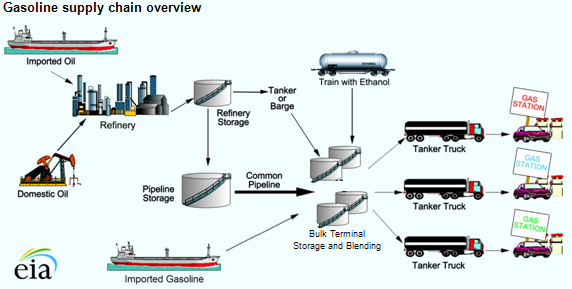
1.1 Real Crude Sellers Are Extremely Rare
Real Crude Oil sellers include:
NOCs (National Oil Companies)
Export terminals
Pipeline operators
Major refineries
Super traders (Vitol, Glencore, Trafigura)
Official off-takers with verifiable allocations
No individual on WhatsApp can legally access:
A government pipeline
An export terminal
A crude lifting quota
An ATC (Authority to Load)
A monthly export allocation
If a seller cannot prove pipeline or terminal access → they are not real.
1.2 Crude Oil Is NOT Stored Like Diesel or Jet A1
Crude Oil moves through:
Pipelines
Government-regulated terminals
Allocation systems
Lifting programs
Export quotas
Crude is NOT sitting in commercial tank farms waiting for brokers.
Anyone claiming they have “crude stored and ready” is 99% fake unless proven otherwise.
1.3 Fake POP Is the #1 Source of Fraud
Fake sellers love to send:
Fake SGS
Fake ATC
Fake Q88
Fake Bill of Lading
Fake Tank Receipt
Fake Pipeline documents
Important:
A TRUE POP is never released before MT799/MT760 AND full compliance.
Anyone sending POP early is automatically fake.
SECTION 2 — The 7 Real POP Documents That Prove Crude Existence (2025 Official List)
Only seven documents prove real crude ownership.
Everything else is decorative, fake, or irrelevant.
2.1 ATC – Authority To Load (Most Important Document)
Issued by:
Ministry of Petroleum
NOC
Export terminal authority
It proves:
✔ Seller has a real loading slot
✔ The crude is scheduled for export
✔ The seller has actual access to a pipeline batch
✔ Terminal acknowledges upcoming loading
No ATC = No crude.
Period.
2.2 Q&Q Report (SGS / Intertek / BV)
Proves the product’s specifications:
API gravity
Density
Sulfur
BS&W
Pour point
Water content
Batch ID
Terminal location
Real Q&Q includes:
✔ Terminal ID
✔ Pipeline batch number
✔ Date stamp
✔ Inspector signature
✔ API consistent with claimed grade
A Q&Q received before compliance = fake.
2.3 Pipeline Injection Receipt
This is the single most reliable proof that the crude exists.
It shows:
The volume injected
Batch ID
Pipeline route
Time stamp
Source terminal
Fake sellers NEVER have this.
Only NOCs and exporters have access.
2.4 Tank Storage Certificate (Only for Certain Ports)
Applicable in:
Cushing
Fujairah
Rotterdam (rare)
Saldanha Bay
Ras Tanura
Very few crude products are stored in commercial tanks.
If provided, must contain:
✔ Tank number
✔ Terminal stamp
✔ Volume
✔ API
✔ Batch movement history
2.5 Bill of Lading (B/L) — Only AFTER Loading
A B/L BEFORE loading = 100% fake.
Real B/L contains:
Vessel name
IMO number
Loading terminal
Grade of crude
Total barrels
Date of issuance
Shipping agent stamps
Buyers NEVER receive B/L before the vessel is loaded.
2.6 Export License / Allocation Number
Issued by:
NOC
Ministry of petroleum
Government export office
Fake sellers avoid giving the allocation number because:
It’s verifiable
It exposes fraud
It can be checked in minutes
NNRV always checks allocation numbers.
2.7 Certificate of Origin
Issued by:
Chamber of Commerce
Ministry
Terminal authority
Confirms:
Actual country of production
Type of crude
Verification by a real authority
Fake versions usually omit serial numbers or QR codes.
SECTION 3 — NNRV Expert Analysis: How to Detect a Fake Crude Seller in Seconds
3.1 The 12 Red Flags of a Fake Seller
Sends POP before MT799/MT760
Only uses WhatsApp
POP with no serial numbers
Avoids giving allocation number
Offers unrealistic discounts
Claims to be “direct with NOC”
Cannot name the export terminal
Cannot confirm pipeline batch
No bank officer available
Sends B/L before loading
ATC has no verification stamp
Q&Q dates don’t match pipeline cycle
If even one red flag appears → it’s fake.
3.2 The 9-Level NNRV Verification Process
To validate any crude seller, NNRV checks:
Corporate documentation
Export terminal identification
Pipeline batch confirmation
Allocation number authenticity
ATC legitimacy
SGS/Q&Q authenticity
Vessel schedule or nomination
Bank officer confirmation
Sanctions & AML screening
This institutional process eliminates 99% of fake sellers.
SECTION 4 — Step-by-Step Process to Verify a Crude Seller (A–Z)
Step 1 — Buyer sends ICPO + KYC + CP
Seller must show legitimacy AFTER this stage.
Step 2 — Seller issues SCO + SPA Draft
Step 3 — SPA Signed by both parties
Step 4 — Buyer’s Bank sends MT799 (Pre-Advice)
Shows the buyer is real.
Step 5 — Seller confirms terminal allocation slot
Step 6 — Buyer sends MT760 (SBLC) or MT700 (LC)
Secures the crude.
Step 7 — Seller releases full POP (7 real documents)
Via secure data room only.
Step 8 — Independent inspection (SGS/Intertek)
Step 9 — Loading or CIF execution
This is the real international procedure.
SECTION 5 — Buyers’ & Sellers’ Questions (20 Professional Answers)
10 Buyer Questions
Does POP come before MT799? → Never.
Can ATC be forged? → Yes, 80% online are fake.
Can I inspect pipeline before SPA? → No.
Is Crude stored like diesel? → No.
How to verify Q&Q? → Through SGS directly.
Are mega discounts real? → No.
Who verifies allocation? → NNRV.
Can I buy 2 million barrels without SBLC? → Impossible.
Are intermediaries allowed? → Yes with LOA.
Can we use MT103 only? → Rarely for crude.
10 Seller Questions
How to filter fake buyers? → Require MT799 first.
Why ask for SBLC? → Protection + compliance.
When to give POP? → After MT760.
Who pays inspection? → Buyer.
Can buyer check allocation? → Yes via NNRV.
How to avoid broker chains? → Documentation.
Is ATC mandatory? → Yes.
Can pipeline be visited? → Never.
Should seller accept “proof of funds PDF”? → No.
Is WhatsApp communication safe? → No.
SECTION 6 — Why This POP Procedure Is Global & Non-Negotiable
It is enforced by:
ICC Incoterms 2020
Basel III
NOC export regulations
Pipeline governance frameworks
OFAC / EU sanctions
SGS & Intertek international standards
SWIFT ISO 20022 banking rules
This is why real sellers never negotiate beyond compliance logic.
SECTION 7 — Professional CTA
📌 Need to verify a Crude Oil seller?
Need to authenticate POP or allocation?**
NNRV Trade Partners provides:
Full institutional seller verification
POP authentication
Pipeline & terminal confirmation
Allocation number validation
SWIFT & compliance advisory
End-to-end due diligence
📩 info@nnrvtradepartners.com
🌐 www.nnrvtradepartners.com
Avoid 99% of fake sellers.
Secure your Crude Oil deals with institutional protection.
Mini FAQ (5 Quick Answers)
What proves 100% that the seller owns the crude?
ATC + Pipeline Injection Receipt + Verified Allocation.Can a seller show POP before SWIFT?
Not in real transactions.What is the strongest POP document?
Pipeline Injection Receipt.Do real NOCs use WhatsApp for deals?
Absolutely not.How quickly can NNRV verify a seller?
24–72 hours depending on jurisdiction.