Introduction — Why Most Buyers Misinterpret SGS Reports Before DIP
In Crude Oil (BLCO, Bonny Light, Basrah, Forcados, ESPO, Arab Light…), the SGS report is the first document serious buyers need to analyze BEFORE authorizing a DIP test or Q&Q inspection.
The problem?
Most buyers:
Don’t understand the API gravity scale
Don’t know how to interpret BS&W
Don’t know what sulfur values mean
Don’t understand terminal validation
Can’t detect forged SGS documents
Misinterpret batch references and tank numbers
Cannot spot inconsistencies between SGS and pipeline movement
Fraudsters exploit this, providing fake SGS reports that look convincing but collapse under real analysis.
This guide teaches you how to read, interpret, and authenticate a real SGS Crude Oil report before scheduling a DIP test—exactly like NOCs, refineries, and institutional trading desks do.
SECTION 1 — Understanding What an SGS Crude Oil Report Really Is



1.1 SGS Q&Q = Quantity & Quality
A real SGS Crude Oil Report evaluates:
QUALITY Parameters
API Gravity
Density @ 15°C
Sulfur Content
BS&W (Basic Sediment & Water)
Pour Point / Cloud Point
Viscosity
Flash Point
Water Content
Metals / Contaminants (if required)
Asphaltenes
QUANTITY Parameters
Available volume
Ullage & tank height
Temperature
Tank reference
Batch number / Pipeline injection data
A real SGS report maps both quality and quantity based on the tank or pipeline batch.
1.2 SGS NEVER issues pre-POP or “sample” reports
SGS is an independent laboratory.
They do not:
create sample reports
issue “example SGS”
release Q&Q without inspection
send pre-verification reports for free
Any SGS sent before:
POP release
compliance
MT799/MT760 readiness
tank/pipeline access
…is fake.
1.3 SGS reports are ALWAYS linked to:
A physical tank
A specific terminal
A pipeline batch ID
A timestamp
An official SGS office
A report without these = fraud.
SECTION 2 — How to Read Each Section of an SGS Crude Oil Report (A–Z Breakdown)
Below is the institutional interpretation of every important section.
2.1 Buyer Checklist: What MUST Appear on the First Page
A genuine SGS report ALWAYS includes:
| Element | Why It Matters |
|---|---|
| SGS logo + report number | Each report is traceable |
| Terminal name & ID | Proves location of crude |
| Tank number or pipeline batch | Identifies product source |
| Date & time of inspection | Ensures recency |
| Inspector signature | Mandatory verification |
| Client name | Seller or terminal account |
| Sample reference | Links lab sample to tank/pipeline |
If ANY of these are missing → fake.
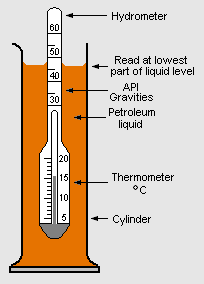
2.2 The API Gravity Section (Most Important Quality Metric)
API Gravity determines value
Light crude: > 35° API (BLCO is 33–38)
Medium crude: 22–31
Heavy crude: < 22
Institutional rule:
API must match the grade the seller claims.
Example:
If seller claims BLCO, but SGS shows 30° API, the report is invalid.
How to verify authenticity:
Compare API to density. API ↔ density must correlate scientifically.
Fake reports often have mismatching values.
2.3 Sulfur Content
Sulfur defines:
crude value
refinery compatibility
environmental compliance
BLCO typical sulfur: 0.14–0.16%
Arab Light sulfur: 1.8–2.0%
If sulfur values don’t align with the grade → fake seller.
2.4 BS&W (Basic Sediment & Water)
BS&W shows contamination.
Standard acceptable BS&W:
< 0.5% for most export crude
Anything above 1% is low-quality
High BS&W = pipeline contamination or old crude.
Fake reports often show no BS&W at all → impossible.
2.5 Pour Point, Flash Point, Viscosity
These confirm:
crude type
lifting feasibility
storage temperature
export compliance
Inconsistencies here reveal alteration or fraud.
2.6 Tank Information Section
Must include:
Tank number
Ullage
Temperature
Volume
Terminal name
Tank height
A Crude Oil tank with missing:
ullage
temperature
dip readings
…is a fake document.
2.7 Pipeline Batch Information
For pipeline-based crude:
Batch ID
Injection point
Pipeline name
Date
Volume
Terminal intake reference
Pipeline details missing = seller does NOT control any crude.
SECTION 3 — NNRV Expert Analysis: How We Authenticate an SGS Before DIP
NNRV uses a 7-step verification method:
Check report number with SGS database
Match API & density correlation (scientific validation)
Verify terminal code
Contact terminal operator (institutional access only)
Validate pipeline batch ID with government registry
Cross-check SGS inspector signature
Check consistency with typical grade characteristics
This eliminates 99% of fake SGS reports.
SECTION 4 — Step-by-Step Guide: How Buyers Should Use SGS BEFORE DIP Test
Step 1 — Request POP AFTER SWIFT readiness
Never accept SGS before MT799/MT760.
Step 2 — Verify SGS authenticity through NNRV
Document verification first.
Step 3 — Match SGS with claimed grade
API, sulfur, viscosity.
Step 4 — Check terminal & tank information
Location must be verifiable.
Step 5 — Compare SGS dates with allocation schedule
Old SGS = recycled document.
Step 6 — Only then perform DIP test
DIP test must match SGS quality parameters.
Step 7 — Confirm post-DIP analysis
SGS after DIP must align ± industry tolerance:
API variance: ± 0.3°
Sulfur variance: ± 0.05%
Large variance = fraud.
SECTION 5 — Buyer & Seller Questions (20 Professional Answers)
10 Buyer Questions
Is SGS before SPA real? → No.
Can SGS be forged? → Yes.
Who verifies SGS? → NNRV or SGS office.
What is strongest indicator of fraud? → Missing batch ID.
Should buyer pay DIP? → Yes, DIP is buyer inspection.
Can SGS be older than 30 days? → Risky.
Does SGS prove ownership? → No—proves quality only.
Should SGS include terminal location? → Mandatory.
Does SGS show allocation? → No.
Can I rely on a PDF? → Only after verification.
10 Seller Questions
When to release SGS? → After MT799 or MT760.
Does SGS protect seller? → Yes, proves quality.
Do sellers produce SGS themselves? → No—third-party only.
Should seller block DIP? → Never.
When does DIP occur? → Before loading.
Can seller reuse old SGS? → No.
Who pays Q&Q? → Buyer.
Should we allow buyer’s inspector? → Yes.
Can DIP fail? → Yes, if product degraded.
Should SGS be uploaded to a data room? → Yes.
SECTION 6 — Why SGS Compliance Is Mandatory (Legal & Institutional Framework)
The SGS Crude Oil inspection system is governed by:
API MPMS standards
ISO 3170 & ISO 3171
SGS Global Petroleum Protocols
ICC Incoterms 2020
NOC export requirements
Pipeline quality control rules
These frameworks ensure:
product integrity
terminal accountability
pipeline traceability
buyer protection
SECTION 7 — Professional CTA
📌 Need to verify an SGS Crude Oil report before DIP?
Looking to authenticate terminal, pipeline, batch ID or allocation?
NNRV Trade Partners offers:
SGS authenticity verification
Crude Oil document analysis
Pipeline & batch validation
Terminal verification
SWIFT compliance support
Complete Crude due diligence
📩 info@nnrvtradepartners.com
🌐 www.nnrvtradepartners.com
Avoid fake SGS.
Operate with institutional precision.
Mini FAQ (5 Quick Answers)
What proves a real SGS?
Valid report number, terminal code, batch ID.Is SGS alone enough to proceed?
No—you must match it with POP.Can DIP be done without SGS?
No—SGS guides DIP expectations.What variance is acceptable?
API ±0.3°, Sulfur ±0.05%.How fast can NNRV verify SGS?
12–48 hours.