⛽ EN590 ULSD — Full Technical Specifications
EN590 Ultra-Low Sulphur Diesel (ULSD) is the globally recognized standard for automotive diesel in Europe and many international markets. Its strict chemical and physical requirements ensure optimal engine performance, minimal particulate emissions, and full compliance with Euro 5 / Euro 6 environmental regulations. Below is a complete breakdown of EN590 ULSD specifications used in international trade, transport, and refinery contracts.
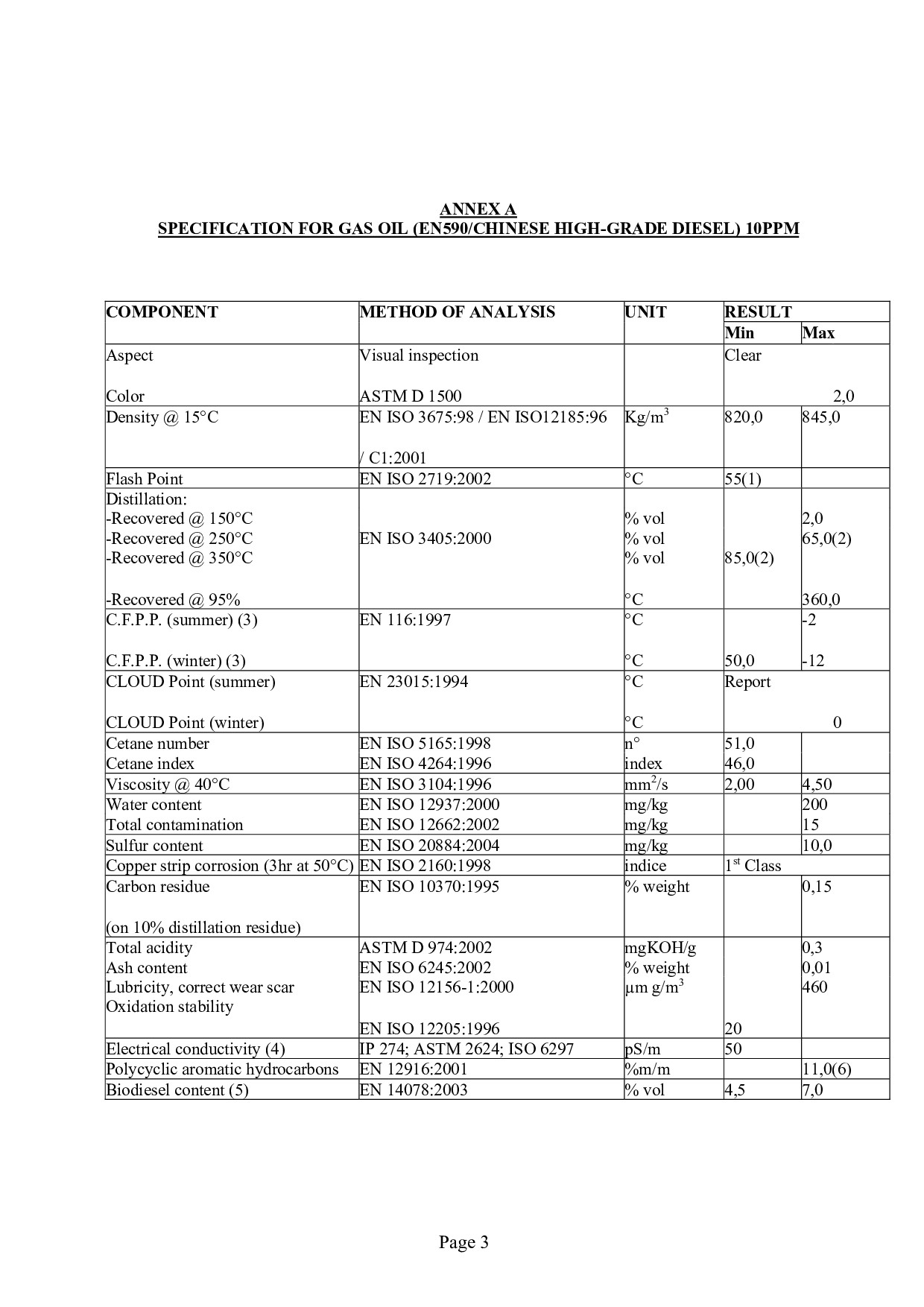
Illustration: ULSD (Ultra-Low Sulphur Diesel) — standard EN590 specification used in European and international markets.
📋 Complete EN590 ULSD Technical Specifications
| Parameter | Specification |
|---|---|
| Sulphur Content | ≤ 10 ppm (ULSD standard) |
| Cetane Number | Minimum 51 |
| Density @ 15°C | 820–845 kg/m³ |
| Flash Point | ≥ 55°C |
| CFPP (Cold Filter Plugging Point) | Varies by climate class: +5°C to −34°C |
| Viscosity @ 40°C | 2.000–4.500 mm²/s |
| Polycyclic Aromatic Hydrocarbons (PAH) | ≤ 11% m/m |
| Lubricity (HFRR @ 60°C) | ≤ 460 μm wear scar |
| Water Content | ≤ 200 mg/kg |
| FAME (Fatty Acid Methyl Ester) Content | Up to 7% (B7 diesel) per EN14214 |
🌍 Global Importance of EN590 ULSD
EN590 ULSD is the backbone of the European diesel market and is the benchmark reference for many international diesel contracts across Africa, the Middle East, Asia, and South America. Its chemical stability, low particulate emissions, and compatibility with modern high-pressure injection engines make it the standard of choice for:
- ⚙️ Automotive fleets (Euro 4 / Euro 5 / Euro 6)
- 🚛 Logistics operators and heavy-duty trucks
- 🚜 Agricultural and industrial machinery
- 🛥️ Marine MGO applications (low-emission coastal operations)
- 🏭 Backup generators & industrial engines
🚢 Logistics & Storage Characteristics
EN590 ULSD requires strict handling and storage protocols to preserve stability:
- 🛢️ Stored in clean, dry tanks to avoid microbial growth
- 🔥 Kept above CFPP threshold to prevent gelling in cold climates
- 🚚 Transported via truck, rail, or vessel under sealed, contamination-free conditions
- 📦 FAME content requires monitoring to prevent oxidation over long storage periods
📦 EN590 Contract Grades (Trade Standard)
- EN590:2013 — current global benchmark
- EN590 10 ppm ULSD — premium export grade
- EN590 Winter Grade (Arctic / Alpine CFPP −22°C to −34°C)
- EN590 Summer Grade (+5°C CFPP)
- EN590 B7 — biodiesel-blended (max 7%)
This specification sheet is suitable for refining contracts, shipping tenders, DOCs, SGS certifications, and international supply agreements.

About the Author
With extensive experience in international finance, the author structures high-level funding
solutions for governments, private corporations, public–private partnerships (PPP),
and large-scale development projects across energy, infrastructure, real estate,
education, healthcare, agriculture, and humanitarian sectors.
Operating through a global network of top-tier banks, institutional partners,
private capital groups, and regulated financial platforms, the author manages
confidential and compliant strategies involving SBLC, BG, MTN, DLC,
trade finance, structured finance, and monetization frameworks.
All processes follow strict AML/KYC, due diligence, and international regulatory
standards.
The author’s mission is to simplify access to world-class financial knowledge and
bring clarity to complex funding mechanisms, empowering governments, communities,
and project owners to realize transformative initiatives that enhance education,
healthcare, housing, clean energy, and economic development in emerging regions.
Professional Engagement & Confidentiality
All interactions are confidential, conducted with integrity, and aligned with
international compliance protocols.
No public fundraising, investments, or financial solicitations are offered.
Each project is treated with discretion, professionalism, and strategic precision.
Important Legal Disclaimer
This content is strictly educational and informational.
It does not constitute financial advice, investment solicitation, securities
promotion, or an offer to participate in any financial product, instrument, or program.
Any mention of SBLC, BG, MTN, PPP, monetization, structured finance, or trade finance
is purely illustrative and intended to promote understanding of global financing
mechanisms.
All real transactions require independent legal, tax, and regulatory assessments
by qualified professionals.
The objective of these publications is to contribute to global development by
promoting transparency, education, access to funding knowledge, and sustainable
solutions for social welfare, healthcare, housing, and humanitarian progress.
Contact
For confidential professional inquiries:
Email: info@nnrvtradepartners.com